


Updated: May 6
Simple changes that support independent living
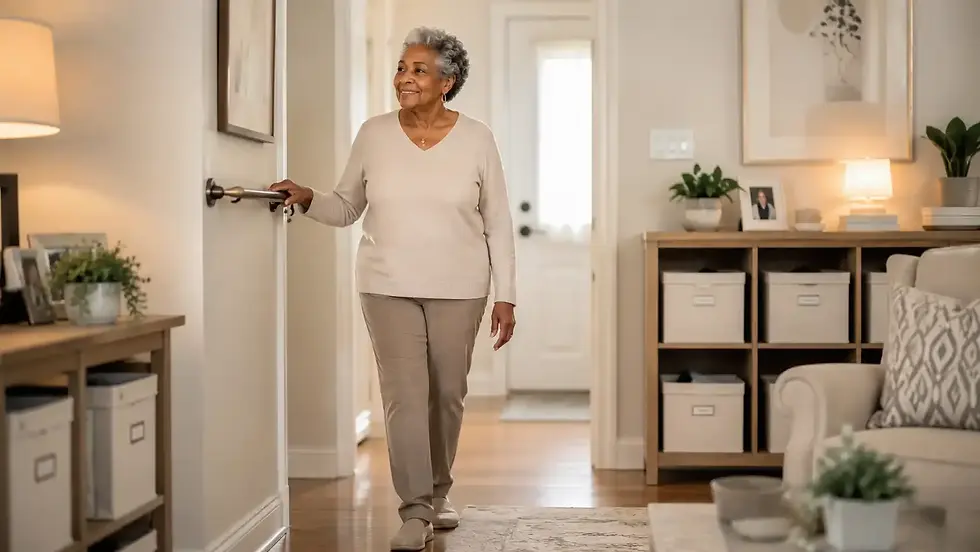
Let's talk about Mama
If you've ever watched your aging parent shuffle across a too-slippery floor in socks, you know the kind of anxiety that grips your chest. I’ve been there, watching my own mom navigate a home that wasn’t built with her in mind, even though she’s lived in it for decades.
That’s part of why this work means so much to me. Organizing isn’t just about making things “look nice.” It’s about creating dignity, independence, and safety, especially for our elders.
Why this matters more than ever
We’re living longer, but our homes aren’t always keeping up with us. And while big renovations are great, you don’t need to remodel the entire house to make it senior-safe.
Sometimes the most impactful changes are the simplest:
Repositioning frequently used items to waist height (goodbye, step stool hazards)
Clearing floor clutter to prevent falls (especially the sneaky kind like extension cords and area rugs)
Labeling everyday drawers and bins for memory support
Adding bedside caddies, grab bars, and touch lights in key areas
I call it aging in place — with grace.
What organizing for seniors really looks like
It’s not a one-size-fits-all approach. Every senior has different needs, abilities, and comfort levels. When I work with older clients (or their adult children), we take time to:
Understand their daily routines
Are they cooking? Reading? Hosting grandkids?
Assess mobility and memory needs
Is it hard to reach, bend, or remember where things go?
Create solutions they can maintain
Because if the system’s too complicated, it won’t stick.
One of my favorite projects was helping Ms. Gwen, a retired teacher in her late 70s, rework her bedroom and bathroom. We swapped her rolling desk chair for a stable seat with arms, placed her meds in a labeled tray by her kettle (where she actually starts her day), and added a small step-by-step instruction sheet in clear font for tech use. She cried tears of relief. I did too.
This isn’t just about safety. It’s about respect.
Our elders deserve homes that work for them, not just homes that look good on paper.
And the truth is, many of them won’t ask for help. They’ve lived through hard times, built families, careers, and entire communities. They’re not going to call and say, “Hey, I’m overwhelmed by my pantry and the laundry’s on the wrong floor.” But that doesn’t mean they aren’t struggling.
Helping them means observing, listening, and honoring their preferences — not bulldozing through with labels and checklists. (Unless they're into labels. In that case, let’s color-code everything.)
What you can do today
Whether you’re an older adult yourself or supporting a loved one, here are a few easy first steps:
Do a walk-through of the home with “safety goggles” on. Look at lighting, floor flow, and reach zones.
Ask what feels frustrating or hard, not just what looks messy.
Start with one high-impact area, like the bathroom or entryway. These are often where safety and stress collide.
And if it feels like too much? That’s okay. That’s where I come in.
Final Thought: Organizing is care
If you’ve been thinking about making your (or your loved one’s) home easier to live in, now is the perfect time.
Not because you “should,” but because everyone deserves to feel safe, seen, and self-sufficient in their own space, especially our elders.
Let’s connect: Do you know a senior who could benefit from a safer, more functional home setup? I’d love to hear your story. Drop a comment or reach out for a chat. Aging in place doesn’t mean doing it alone.